
Aim of cGvHD treatment and general considerations
Treatment goals1

Symptom burden reduction

Improved QOL

Fibrosis prevention and disability

Immune tolerance
(i.e., ability to withdraw
immunosuppressive agents)

Improved survival

NCCN guidelines for the management of cGvHD3

Updated 2024 consensus recommendations of the EBMT
Therapeutic algorithm proposed based on the CTTC consensus-based guidelines 20248
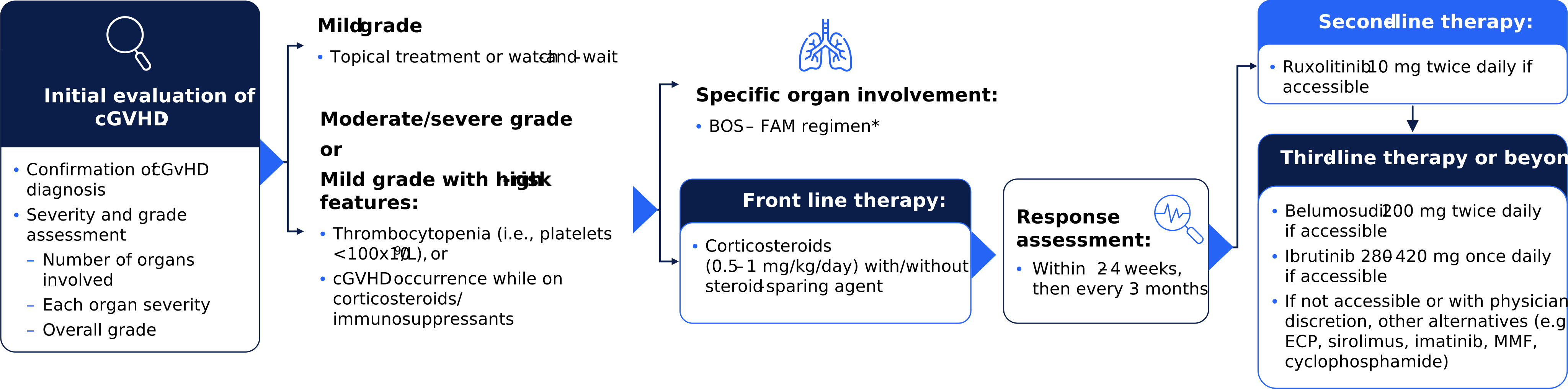
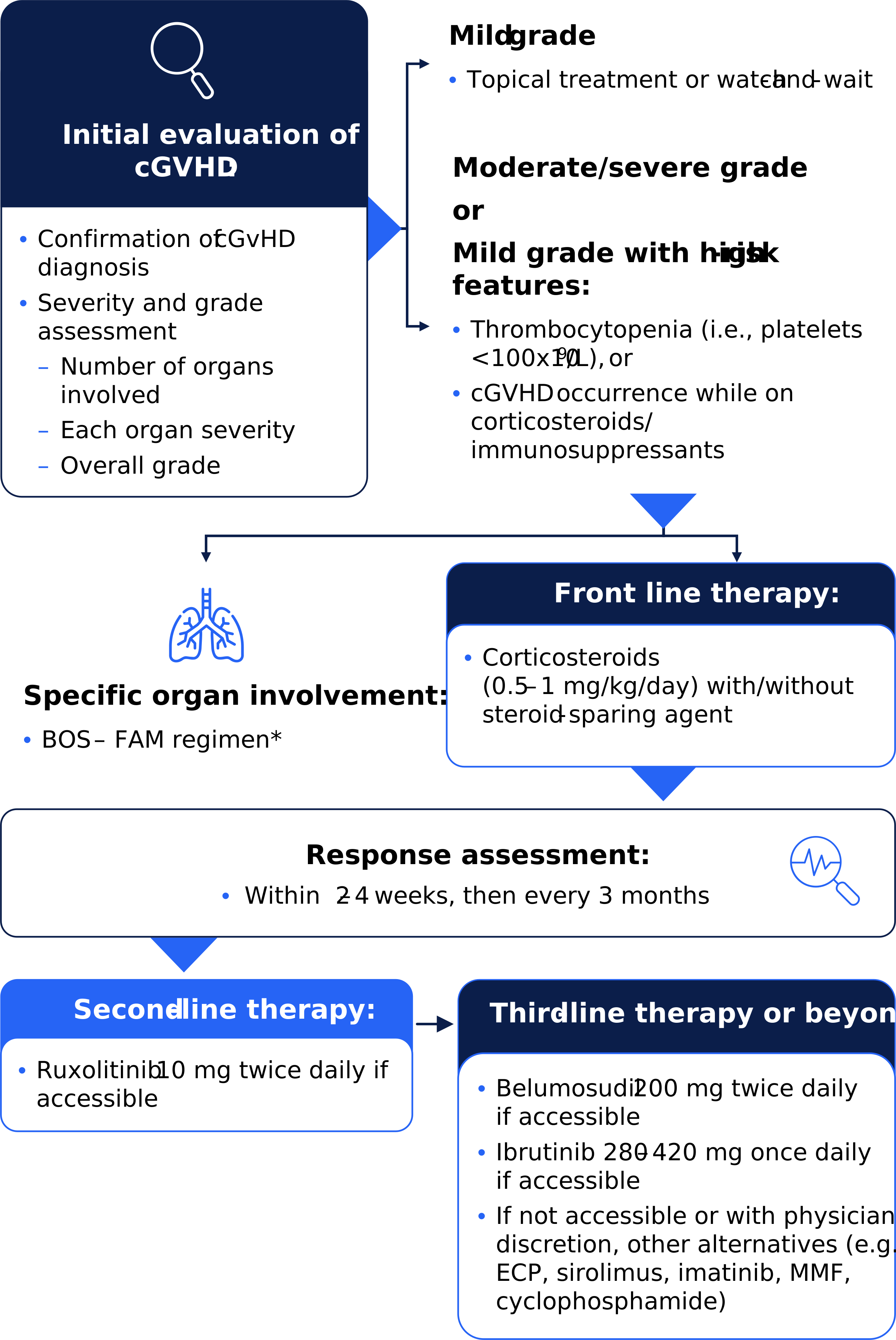
Future directions8
Mode-of-action-based cGvHD drug selection:
In cGvHD treatment, a new approach involves selecting therapies based on their specific modes of action, aligned with the disease progression: inflammatory, immune deregulation, and fibrotic. For instance, drugs like ruxolitinib target inflammation, while belumosudil and axatilimab focus on combating fibrosis. Tailoring treatment based on the patient's clinical presentation and suspected pathogenesis optimizes effectiveness.
Combination strategy
Previously, minimizing the number of immunosuppressive drugs was a key principle in cGvHD management. However, with the introduction of newer targeted drugs, a combination strategy is now being reconsidered. This approach may involve pairing a novel agent like ruxolitinib or belumosudil with another extensively evaluated therapeutic agent.
Steroid-free regimen
There's a pressing need for the development of a corticosteroid-free front-line regimen in cGvHD treatment. Corticosteroids have been the primary treatment for over five decades. Where possible, clinical trials of initial systemic therapy should prioritize investigating steroid-free therapeutic approaches in front-line treatment.
Pre-emptive approach
Adopting a pre-emptive treatment approach could be optimal for enhancing the quality of life and long-term outcomes in patients with highly morbid forms of cGvHD. This strategy has the potential to halt the progression of cGvHD in high-risk individuals who are likely to develop severe and debilitating forms of the disease. Implementing this approach may necessitate additional research into biomarker development for cGvHD.
*central line access, IV infusion, injection, pill that is convenient for patients.
BD, twice daily; cGvHD, chronic-graft-versus host disease; CR, complete response; CS, corticosteroids; CNIs, calcineurin inhibitors; ECP, Electrocorproeal photopheresis; FFS, failure-free survival; MMF, Mycophenolic acid; NR, not registered; OD, once daily; ORR, overall response rate; PR, partial response; QoL, quality of life; SR, steroid refractory; SOC, standard of care; URTI, upper respiratory tract infection; NCCN, National Comprehensive Cancer Network; EBMT, European Society for Blood and Marrow Transplantation.
1. Hamilton BK. Hematology Am Soc Hematol Educ Program. 2021;2021(1):648-654.; 2. Malard F, et al. Am J Hematol. 2023;98(10):1637-1644; 3. Hematopoietic Cell Transplantation, Version 3.2022, NCCN Clinical Practice Guidelines in Oncology; 4. Flowers MED, et al. Blood. 2015;125(4):606-615.; 5. Dignan FL, et al. British journal of haematology. 2012;158(1):46-61.; 6. Zeiser R. J Clin Oncol. 2023;41(10):1820-1824.; 7. Hamilton BK. Hematology Am Soc Hematol Educ Program. 2021;2021(1):648-654. 8. Kim D.D.H et al. Curr Oncol. 2024;31:1426-1444.; 9. Milkos D et al., Blood. 2017;130:2243-2250.; 10. Cutler C et al. Blood. 2021;138:2278-2289.; 11. Zeiser R et al. N Engl J Med. 2021;385:228-238.